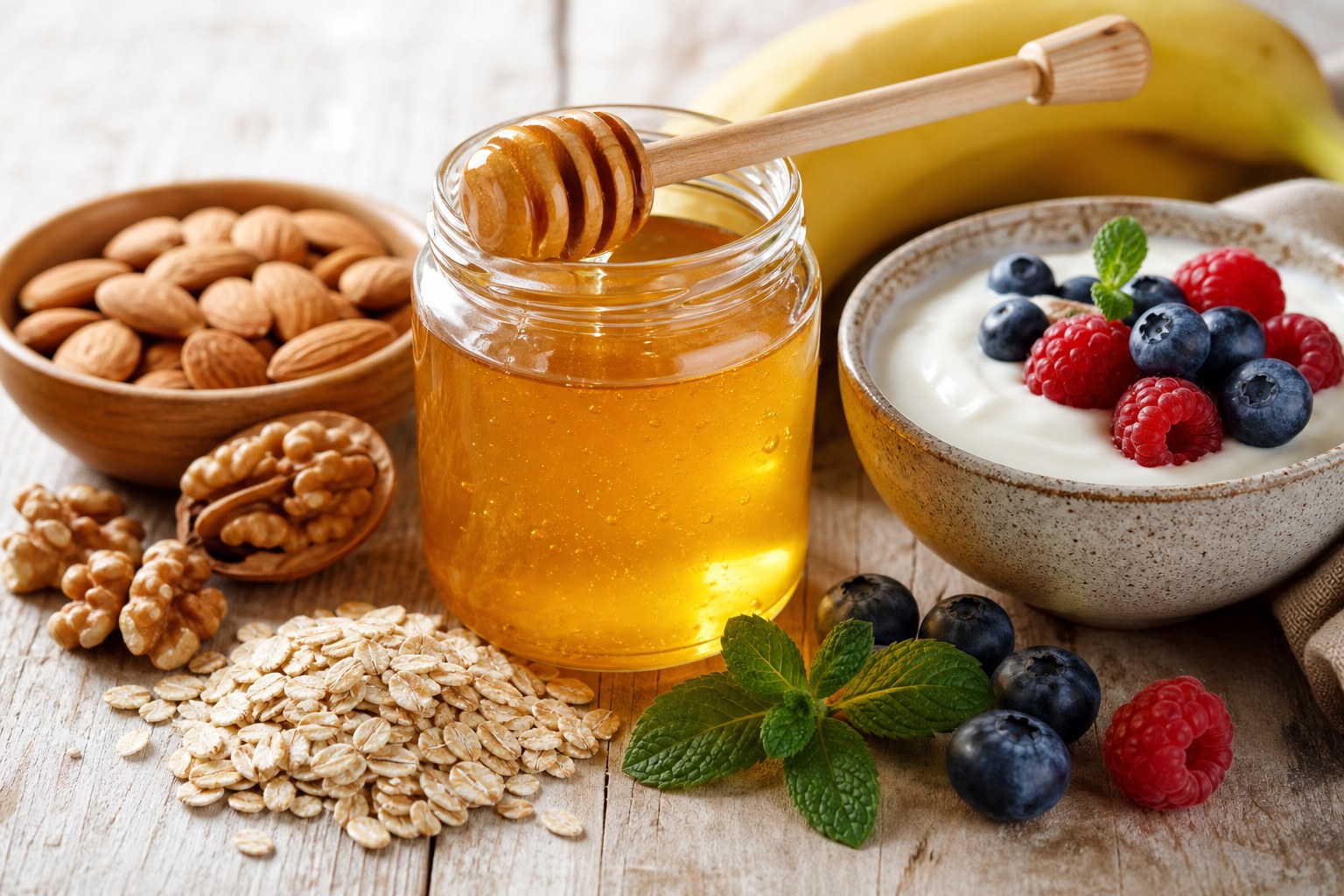
Honey is one of the oldest foods known to humanity, and for most of that long history it has been prized as far more than a sweetener. Behind its warm golden color lies a surprisingly complete nutritional story: natural sugars for quick energy, a small but real collection of vitamins and minerals, a family of enzymes, and plant antioxidants that give honey its depth and character. Understanding what is actually inside a spoonful can help you stop treating honey as an empty sweet and start using it as a thoughtful part of a balanced diet.
What Is Actually in a Spoonful of Honey
Honey is mostly water and natural sugars — mainly glucose and fructose — which is why it tastes sweet and provides energy. But the small remaining percentage is where its nutrition lives. Raw honey contains a modest but genuine mix of micronutrients and bioactive compounds. The exact amounts vary with the flowers the bees visited, the season, and the region, but the family of nutrients is remarkably consistent.
- Enzymes — including invertase, diastase, and glucose oxidase — added by the bees and responsible for honey's subtle living quality.
- Trace minerals such as potassium, calcium, magnesium, phosphorus, zinc, and small amounts of iron.
- Small quantities of B vitamins and vitamin C.
- Antioxidants, mainly flavonoids and phenolic acids, which honey carries over from the nectar and pollen of flowers.
- Organic acids that give honey its gentle, slightly tangy balance.
To be clear, these nutrients appear in small amounts — honey is a condiment, not a multivitamin. A teaspoon will not meet your daily mineral needs. But unlike refined sugar, which is nutritionally empty, honey delivers its sweetness alongside real, useful compounds, which makes it a meaningfully better choice in a whole-food diet.
Antioxidants: Honey's Quiet Strength
The most studied part of honey's nutritional profile is its antioxidants. Flavonoids and phenolic acids are plant compounds that help neutralize free radicals — unstable molecules that can damage cells through a process called oxidative stress. Over time, excess oxidative stress is linked to aging and a range of chronic conditions. Darker honeys, such as buckwheat or forest honey, tend to be richer in these compounds, and a useful rule of thumb is that the deeper the color, the more antioxidant power a honey is likely to hold. Choosing raw, minimally processed honey matters here, because heavy heating and fine filtering can strip away many of these delicate plant compounds.
Natural Sugars Your Body Can Actually Use
Honey's two main sugars, glucose and fructose, are simple sugars that the body absorbs quickly — which is exactly why honey has been used for centuries as a fast, natural source of energy. Because honey is noticeably sweeter than table sugar, most people find they need less of it to reach the same level of sweetness. Its natural balance of sugars also tends to release into the bloodstream a little more gently than refined sugar when enjoyed as part of a meal. That does not make honey a free pass — it is still sugar and should be used mindfully — but it does mean the sweetness you add comes with a gentler profile and a bit of nutritional value.
How to Make Honey Part of a Balanced Diet
Honey fits best when it replaces less nutritious sweeteners rather than sitting on top of them. Here are a few practical ways to make it work for you.
- Keep portions modest — one to two teaspoons a day is plenty for most adults.
- Swap refined sugar for honey in tea, coffee, plain yogurt, and oatmeal rather than adding it as an extra.
- Pair honey with fiber and protein — such as oats, nuts, or yogurt — to slow absorption and keep energy steady.
- Use honey to replace bottled syrups in dressings, marinades, and smoothies.
- Choose raw, minimally processed honey so its enzymes and antioxidants stay intact.
Choosing a Honey That Keeps Its Nutrients
Not every jar on the shelf delivers the same nutritional value. Honey that has been heated to high temperatures or ultra-filtered to look clear can lose much of its enzymes, pollen, and antioxidant content, leaving behind little more than sugar syrup. Nutri Afiat Organic Honey is 100% pure, sourced from selected natural nectar, and handled gently from hive to jar, so the natural enzymes, trace minerals, and plant compounds remain intact in every spoonful. It is a small daily choice that quietly supports a more wholesome way of eating.
Honey will never replace your vegetables — but it is one of the few sweeteners that gives something real back to your body.
The best way to think about honey is not as a supplement, but as a whole food with a genuine nutritional story. It brings fast natural energy, a touch of vitamins and minerals, and a meaningful dose of antioxidants — all wrapped in a flavor that makes healthier choices easier to keep. Used mindfully and in the right amounts, Nutri Afiat Organic Honey can be the difference between a sweetener that costs you and one that gives a little back. Start with a single teaspoon a day, pair it with whole foods, and let your body enjoy the quiet nutrition that has made honey beloved for thousands of years.
Taste the purity yourself
Start your daily wellness ritual with Nutri Afiat Organic Honey.
Keep reading
 Manfaat Madu
Honey and Seasonal Allergies: Soothing Relief and a Daily Wellness Habit
Sniffling, sneezing, and a scratchy throat are the hallmarks of allergy season. Discover how a daily spoonful of pure honey can soothe irritated airways, calm coughs, and support a gentle, natural approach to seasonal allergies.
Read article → Gaya Hidup Sehat
Mindful Living with Honey: Simple Rituals for a Calmer, Healthier Day
Calm is a form of self-care — and a spoonful of pure honey is a gentle anchor for it. Discover simple honey rituals that reduce stress and build a calmer, healthier daily life.
Read article → Hidup Organik
Honey as a Natural Preservative: Reduce Food Waste with a Zero-Waste Kitchen
Long before refrigerators, honey kept food from spoiling. Discover how this ancient preservative can help you preserve fruit, cut kitchen waste, and build a more sustainable, organic home.
Read article →