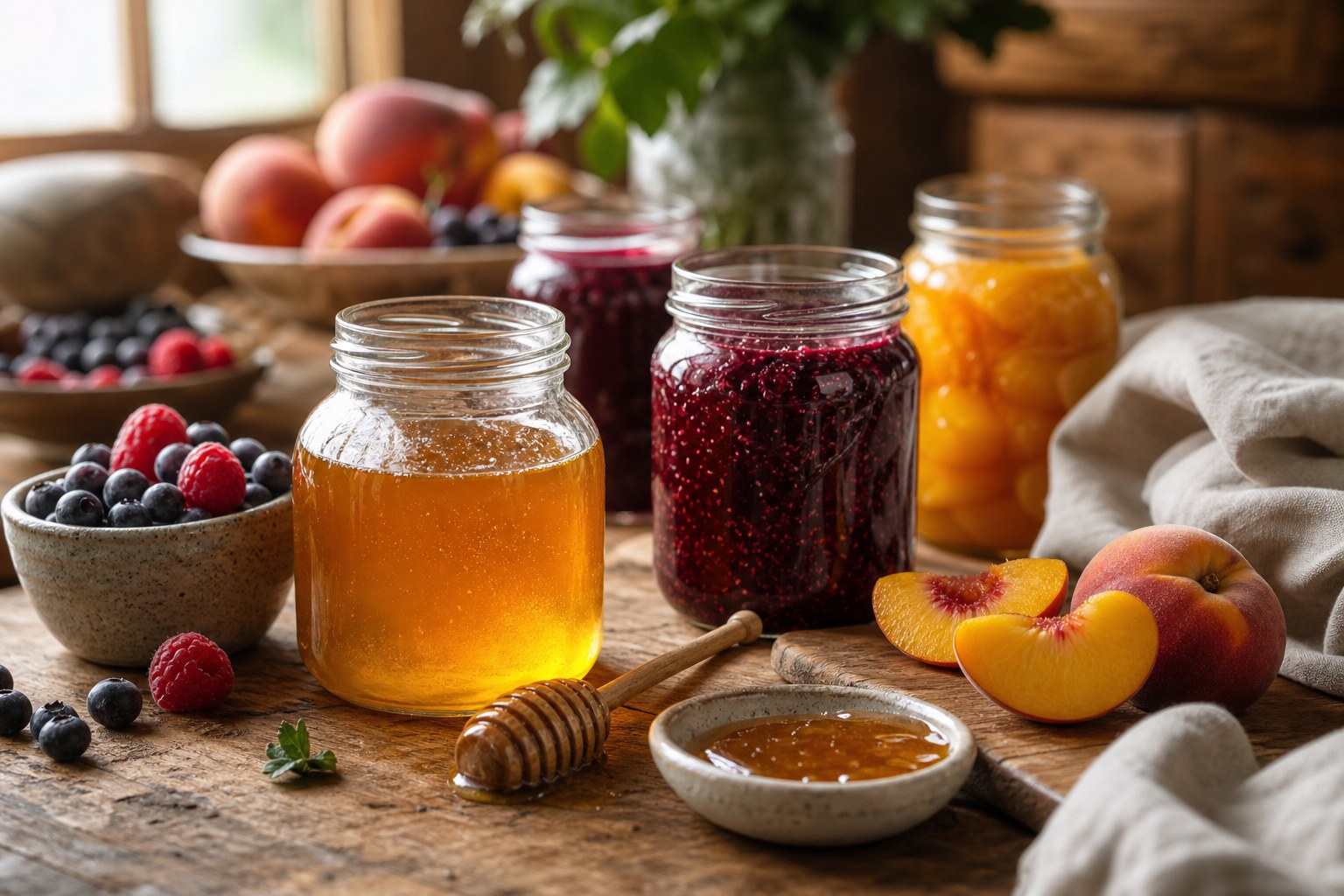
Long before refrigerators and chemical additives, people turned to honey to keep food from spoiling. Sealed in clay jars, honey accompanied traders across deserts and sailors across oceans, prized not just for its sweetness but for its remarkable ability to resist decay. In an era when food waste is a growing concern and many households want a simpler, more sustainable way to live, this ancient skill deserves a second look. Pure honey can help you preserve food naturally, cut down on waste, and build a kitchen that is kinder to the planet.
Why Honey Preserves Food Naturally
Honey resists spoilage for a few simple reasons that work together. Its sugar content is so high and its water content so low that most bacteria and molds cannot survive in it — they dry out through a process called osmosis. Honey is also naturally acidic, which further discourages microbial growth. Finally, raw honey contains enzymes that slowly release small amounts of hydrogen peroxide when diluted, adding a gentle antimicrobial effect. Together, these properties explain why archaeologists have found edible honey in tombs thousands of years old. That same chemistry is what makes honey useful as a natural preservative in your own kitchen.
Preserve Fresh Fruit Without Commercial Sugar
Homemade jams and fruit preserves usually rely on large amounts of refined sugar to stay safe on the shelf. Honey can play the same role while bringing its own floral flavor and natural sweetness. Here is a simple method for honey-sweetened fruit preserves.
- Choose ripe, in-season fruit and wash it well; bruised fruit spoils faster, so use the best pieces.
- Cook the fruit gently in a wide pan until it softens and releases its juices.
- Stir in Nutri Afiat Organic Honey to taste — roughly half a cup for every four cups of fruit, adjusting for the natural sweetness of the fruit.
- Simmer until the mixture thickens and coats the back of a spoon, then spoon it into clean, sterilized jars.
- Store in the refrigerator for two to three weeks, or process properly for a longer shelf life.
Zero-Waste Kitchen Swaps with Honey
Reducing food waste is as much about smart habits as it is about any single ingredient. Honey makes several low-waste swaps easier and more enjoyable.
- Replace flavored, single-serve yogurts with plain yogurt sweetened by a spoonful of honey and topped with ripe fruit.
- Revive stale bread and cake by baking them into a honey-sweetened bread pudding instead of throwing them away.
- Turn soft, overripe fruit into a quick honey compote rather than letting it spoil.
- Sweeten homemade granola and baked goods with honey so you can skip packaged snacks and their wrappers.
- Stir honey into leftover roasted vegetables or grains for a fresh-tasting second meal.
Use Every Last Drop
- When the jar is nearly empty, add warm water or hot tea, shake well, and drink the last sweet bit.
- Stand an upside-down jar in a bowl of warm water so the remaining honey slides down to the lid.
- Use the final drizzle to sweeten a dressing, marinade, or smoothie — nothing needs to be rinsed down the sink.
- If your honey crystallizes, warm the jar gently in warm water rather than discarding it; crystallization is a sign of purity, not spoilage.
A truly sustainable kitchen wastes nothing — and honey is the rare food that makes saving every drop a pleasure.
Choosing Honey for an Organic, Low-Waste Home
The environmental value of honey depends heavily on how it is produced. Honey from bees that forage on clean, chemical-free land supports pollinators, protects ecosystems, and carries none of the residues of industrial agriculture. Choosing certified organic honey also means supporting beekeepers who work with nature rather than against it. Nutri Afiat Organic Honey is 100% pure, sourced from selected natural nectar, and handled gently from hive to jar — so the jar on your shelf reflects the care behind it.
Building a zero-waste, organic kitchen does not require a complete overhaul. It grows from small, repeated choices: preserving fruit before it spoils, turning leftovers into something worth eating, and choosing ingredients that honor the land they come from. Honey sits at the center of all three. Keep a jar of Nutri Afiat Organic Honey on hand, and you have a natural sweetener, a gentle preservative, and a quiet reminder that the old ways still have plenty to teach us.
Taste the purity yourself
Start your daily wellness ritual with Nutri Afiat Organic Honey.
Keep reading
 Resep
Resep
Honey Glazes and Marinades: 4 Easy Recipes to Elevate Your Savory Cooking
Honey is not just for baking and tea. Discover four simple honey glazes and marinades that bring glossy, caramelized flavor to chicken, salmon, and roasted vegetables.
Read article → Kesehatan
Honey for Wound Healing: The Science Behind Nature's Oldest Medicine
Long before modern antiseptics, honey was used to dress wounds and burns. Discover the science behind honey's antibacterial, moisture-locking healing powers — and how to use it safely at home.
Read article → Imunitas
Honey and Gut Health: Strengthen Your Immunity from the Inside Out
Roughly 70 percent of your immune system lives in your gut. Discover how pure honey acts as a natural prebiotic to nourish beneficial bacteria and strengthen immunity from the inside out.
Read article →